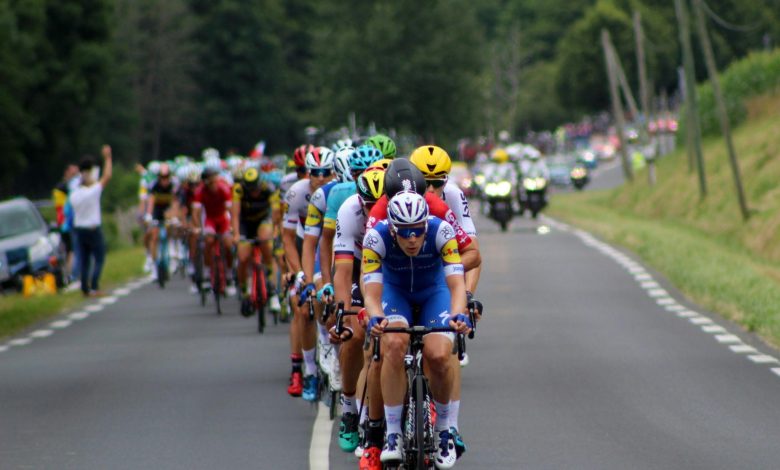
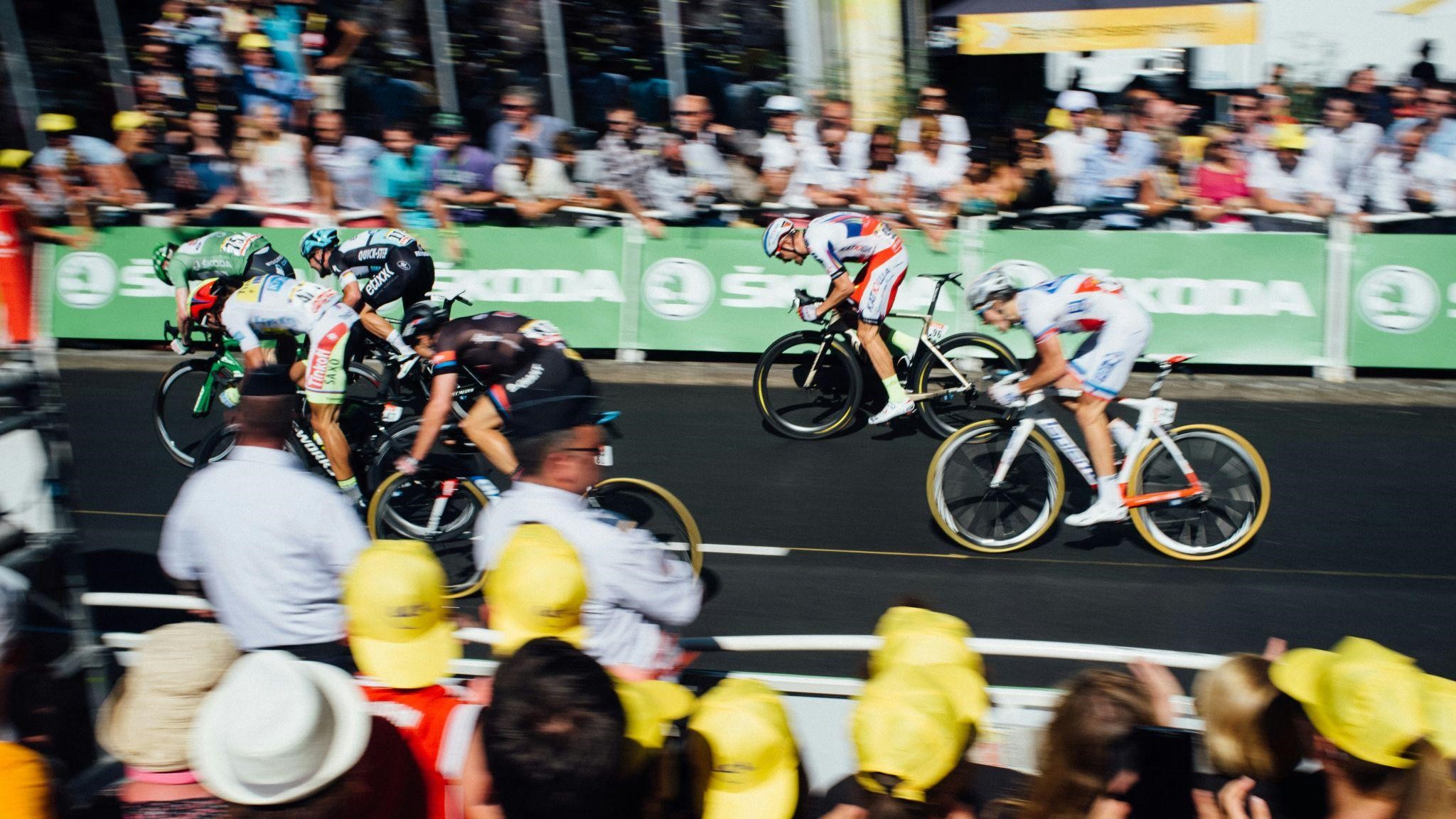
It may sound cliché, but there’s something special about the Tour de France. The dramatic mountain climbs, the chaotic crosswinds, the nail-biting sprint finishes, the champagne-covered podiums. It’s an unparalleled combination of elite performance, breathtaking scenery, and compelling competition.
This year’s instalment promises to deliver on all of the above.
There’s the hot favourite on track for record-equalling dominance, and the peloton of challengers looking to cause an upset. There’s the brutal route with its “crescendo” finish that will test even the most seasoned riders. And there’s all the usual colour and excitement that justifies the three weeks of sleep deprivation Australian cycling enthusiasts endure every July.
A brief history lesson
The Tour de France’s origin story is slightly unhinged, in the best way possible. First run in 1903, it was initially conceived as a marketing stunt designed to drive sales of the French newspaper, L’Auto. The idea was to create the world’s most gruelling cycling race, then capture public attention by providing exclusive coverage.
It worked spectacularly. L’Auto’s circulation doubled, giving it a significant advantage over its main rival, Le Vélo, which folded the following year.
The race itself was also a huge success. Over a century later, it’s still the sport’s biggest stage. Part endurance test, part travelling circus, part national showcase, it has become a global obsession.
Among its champions are true cycling legends.
Five-time winner, Belgian Eddie Merckx, is widely considered the world’s most successful competitive cyclist. Fellow five-time winner, Spaniard Miguel Indurian, dominated the early 1990s with his superior time trial prowess. American Greg LeMond, the first non-European champion, won three times, the last after recovering from a near-fatal hunting accident.
There are also names that many would rather forget. Chief amongst them, Lance Armstrong, who was stripped of his seven consecutive titles after being found guilty of using performance-enhancing drugs. This left a black hole in the winners’ list and fundamentally changed the event’s culture, significantly strengthening the commitment to a clean competition.
There has also been significant innovation in equipment design and preparation techniques. Bikes are lighter and faster, training is more scientific, and racing tactics are much more advanced. Aerodynamic apparel also helps reduce wind resistance and muscle fatigue, while cycling shades optimise visibility by reducing glare and improving clarity.
The 113th edition of La Grande Boucle
This year’s race kicks off on Saturday, 4 July in Barcelona with the team time trial (TTT). While the Catalan capital has previously welcomed three Tour stages, this will be the first time it hosts the Grand Départ. It will also be the first time since 1971 that the Tour has started with a TTT.
And it certainly won’t be an easy start. The TTT may only be 19.1km, but it finishes with two short ascents of Montjuic Park’s punchy terrain. This will be followed by a difficult 182km hilly Stage 2, stretching along the Barcelona coast.
From there, the route heads into France and starts working through the Tour classics. There will be sprint days for the fast guys and tricky hill stages with plenty of opportunities for breakaways. There will also be the brutal mountain blocks, tracking across the Pyrenees, Massif Central, Vosges, Jura, and the Alps.
There are a couple of key differences that set this year’s race apart from previous editions.
First, there’s limited time-trialling compared to recent years. There’s the opening TTT and a 26km individual time trial at Stage 16. This means that most gaps will likely be carved out during the uphills.
There will also be multiple summit finishes. This includes a dramatic back-to-back double ascent of Alpe d’Huez on the final weekend. So, riders who can consistently push on long, hard climbs (and recover quickly) will have a distinct advantage.
The favourite, the contender, and the dark horses
Reigning champion, Tadej Pogačar (UAE Team Emirates – XRG), will roll into July as the overwhelming favourite to secure a record-equalling fifth Tour win. While he’s had the lightest start to the year of the main contenders, his versatility really sets him apart.
This year’s route looks built for him, too. With limited time trial kilometres, the repeated mountain days will likely decide the result. And a race run on pace changes, attacks, and team depth plays right into Pogačar’s hands.
The one question mark is his mental state, as he sometimes races on instinct, which can be risky for a three-week campaign. There have also been some signs that he’s tired of the circus that surrounds the Tour. However, he’s a true competitor and, if he’s anywhere near his best, he’ll be almost impossible to dethrone.
The main threat appears to be two-time winner Jonas Vingegaard (Visma – Lease a Bike). Some were worried about his fitness after a crash in training, and an illness delayed the start of his season. But these were comfortably put to rest by his Paris-Nice performance, where he won by the widest margin in 87 years.
Vingegaard’s big advantage is that he excels where Pogačar sometimes struggles. He’s always cool under pressure, metronomic on long climbs, and is strongest when the race becomes a war of attrition.
Behind those two, there is a crowded tier of talented hopefuls looking to pounce on any signs of weakness. While many names are being tossed around as potential challengers, a couple will be particularly interesting to watch.
Remco Evenepoel (Red Bull – BORA – Hansgrohe) had a blinding start to the season and appeared to be the biggest wildcard. However, expectations have tempered after a few underwhelming performances in races decided by their climbs. Many are now questioning whether he has the legs to make the most of this year’s decidedly uphill route.
Paul Seixas (Decathlon CMA CGM) could also really shake things up. While it’s still to be confirmed whether the 19-year-old will make his Tour debut this year, many are excited by the prospect. Though he has never competed in a race over more than eight stages, his recent second in the Strade Bianche was impressive.
The verdict: Who will win
On paper, it looks like it’s once again Pogačar’s race to lose, particularly given the favourable route. But the Tour de France has never been decided on paper.
Whatever the result, the 2026 Tour is sure to deliver. So, bring on Barcelona!