
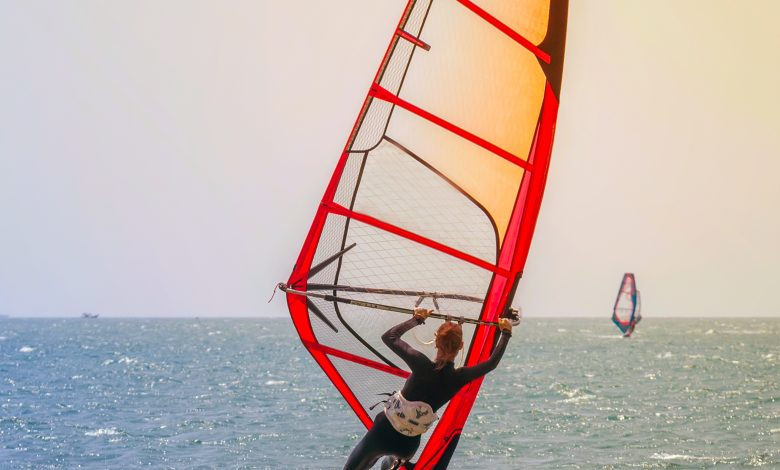
Windsurfing is the exciting fusion of surfing the open ocean and maneuvering an ocean craft with a tactical approach to sailing.
Tapping into the power of the open sea and channeling coastal winds, a windsurfer must be an athlete with complete focus, a body that constantly readjusts, and a mind filled with technical know-how. From conquering the sea’s temperamental chop to accelerating across vast, open expanses, windsurfers must blend physical endurance with a keen awareness of their surroundings.
Understanding the Physical Demands on the Water
Every major muscle group in your body is used when you windsurf. Where a typical surfer uses the force of the wave to propel them forward, a windsurfer must contend with an apparatus that must not only be held but also be steered and adjusted in the air itself.
Core Stability and Balance
Balancing atop a craft that’s constantly in motion means a body that can make a million little adjustments at all times; knees bend to absorb the shock of the waves beneath you, and hips swivel to readjust your center of gravity to make the belly of the hull as flat and streamlined as possible. Your core is an important bridge between the work your upper body is doing to manoeuvre your sail and the direction your lower body is providing.
Shoulder, Back, and Grip Strength
To control your boom, a strong upper body and a lot of stamina are essential for any aspiring windsurfer. The shoulders, forearms and back are constantly called upon as you work against gusting winds, release the harness to perform advanced tricks and manoeuvres, and yank your rig upright as you water start or perform an uphaul in tough conditions.
Mastering Core Techniques for Speed and Precision
The basics of sailing a boat apply here, only they’re modified slightly for a craft operated by a solo rider. Body position and placement on the board make the difference between a drag in the water, or a graceful glide.
Trimming the Sail for Maximum Drive
To go fast and stay stable, knowing how to trim your sail so you’re getting just the right amount of power from the oncoming gusts is crucial. Sheeting in the sail gives you power; letting it out releases pressure on the sail and is essential if you are hit by an unexpected gust. It’s a matter of knowing where that perfect middle point lies; that sweet spot where the board rides up and takes to the plane, reducing your drag massively.
Perfecting Footwork during Turns
Turning the board during tacks and gybes is a matter of precise foot placement and quick steps around the mast. Shifting from one side of the board to the other so you’re always travelling forward and so you don’t lose momentum is all about making everything feel smooth. You need to move your feet quickly across the deck while keeping your rig-flipping action perfectly smooth and the wind in the sail as you bring it across the new tack.
Elevating Performance with Modern Equipment
Windsurfing kits have seen major developments over the years and modern designs make use of marine engineering advances to make them lighter, stronger and infinitely more responsive to the rider’s commands. That means the gear you choose has a serious bearing on how quickly you’ll progress as a windsurfer.
Board Design and Hydrodynamics
Windsurfing board technology means they are now designed with much better rocker lines and concaves to encourage them to get up on the plane as early as possible and with minimal drag. They are now also designed wider for beginners and intermediate riders, giving them added stability, or more narrow and manoeuvrable shapes for advanced riders wanting to maximise their performance when engaged in wave or high-speed slalom riding.
When upgrading your setup, exploring high-quality windsurf boards allows sailors to match volume, width, and fin configurations directly to their local water conditions and skill level.
Lightweight Composite Rigs
Carbon fibre masts, lighter-weight booms and hardwearing mono-film sails all mean that today’s rigs are a fraction of the weight they used to be. These lightweight, high-tech materials let windsurfers push their speed to the limit for longer, without risking fatigue. It’s now possible to cruise long distances and really compete in racing.


